Sampling for the study of the relationship between PTE concentrations, composition, area to weight ratios in tidal gradients in Fucus vesiculosus

6 August 2024

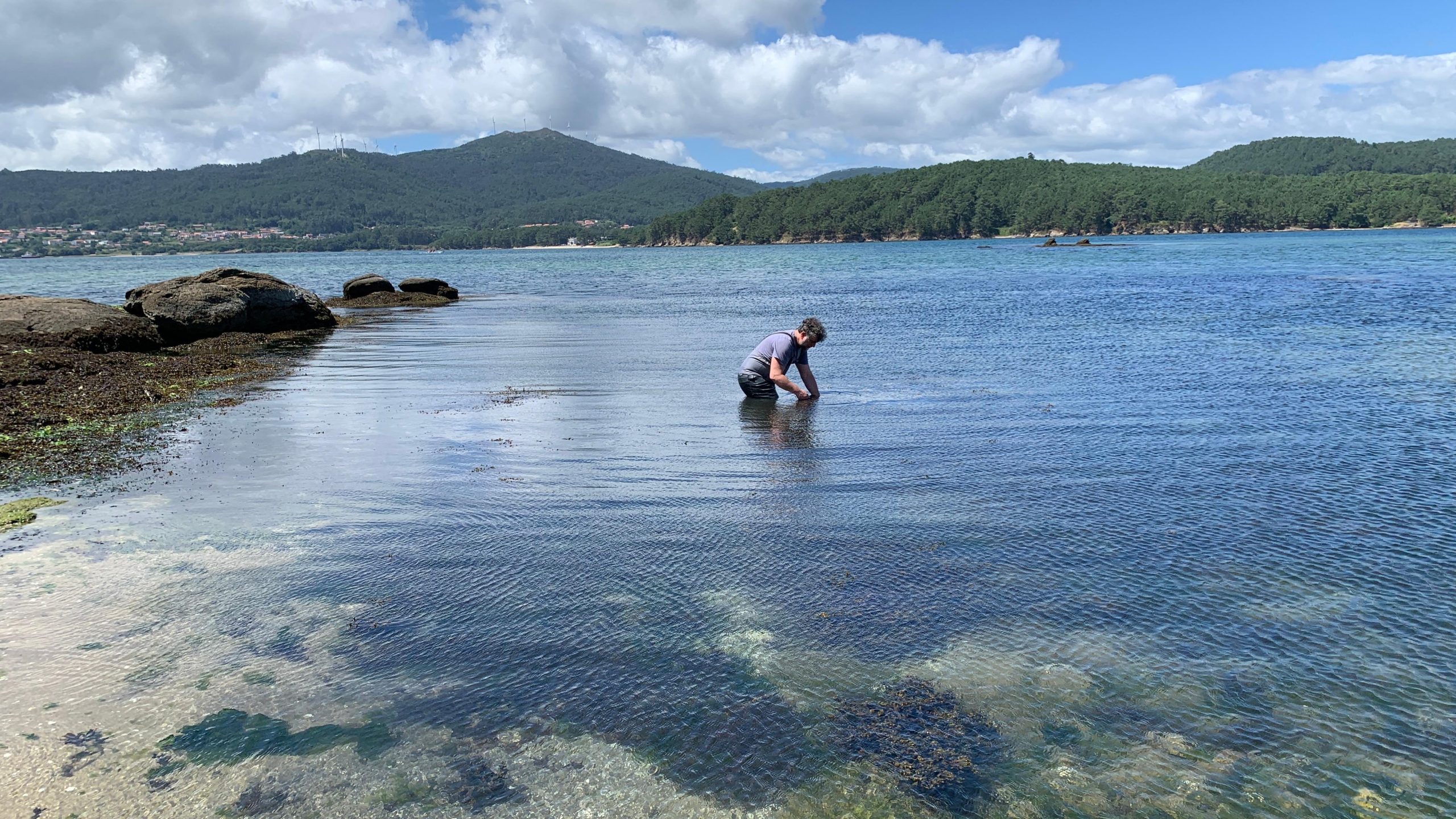
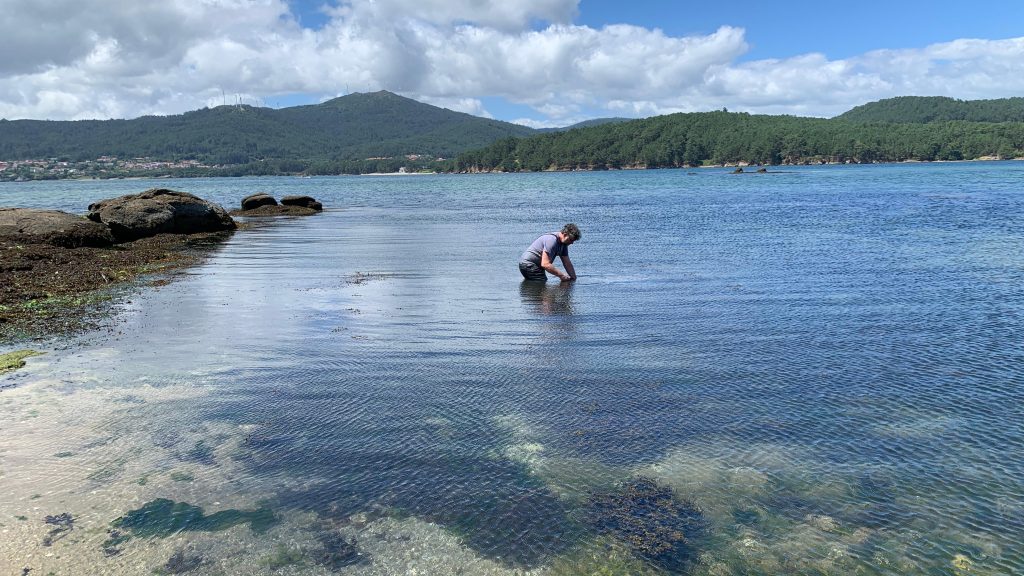
During July 2024 we sampled 100 individuals of F. vesiculosus in an intertidal system to investigate the relationships between PTE, concentrations, composition and area:weight ratio. We want to understand the extent to which intertidal algae altitude determines their chemical composition and how this affects PTE concentrations and morphology. For this purpose, we carried out a random sampling and determined the position of each thallus in 3 dimensions using a robotic total station (Geomax, model Zoom 95) and a GNSS receiver (Geomax). In addition, the coastal system was scanned using tecnología LIDAR. The samples have been processed and digested, and only the determination of PTEs concentrations by ICP and composition by FTIR-ATR remains to be done. A new draft will be available soon!
Related news

Jesús Aboal, as part of the USC “A Ponte do Ensino Medio” Program (https://www.usc.gal/es/campusterra/ponte-ensino), gave a talk about our research project on Wednesday, November 24th, 2025, […]
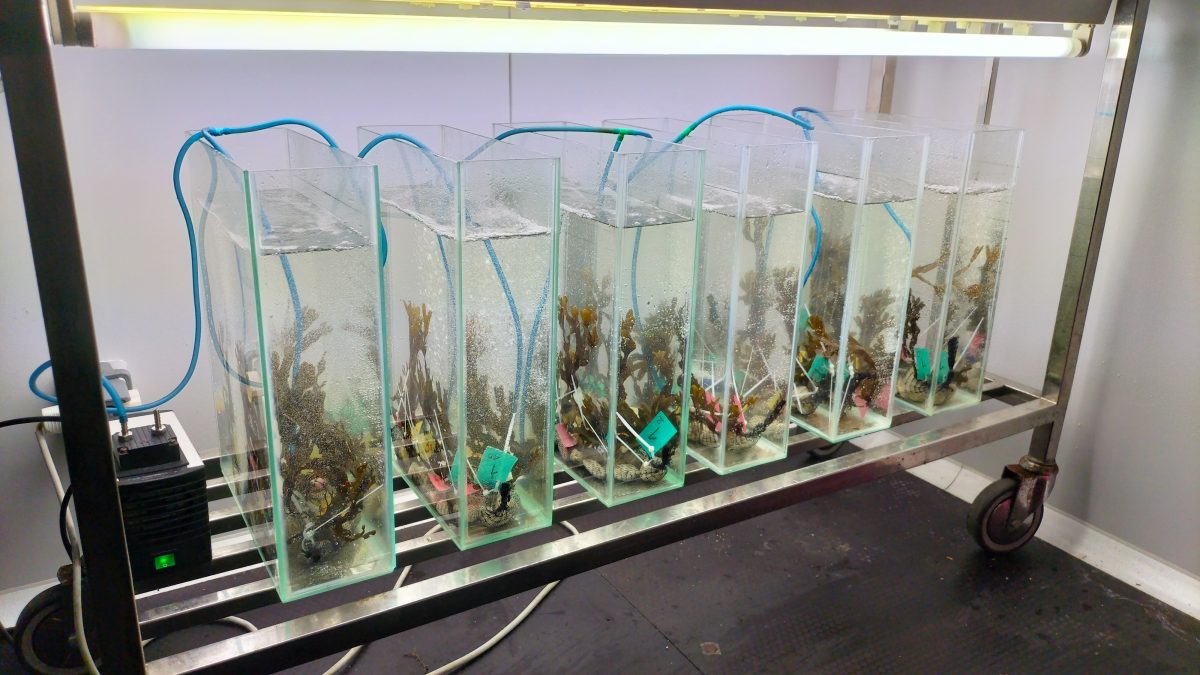
On July 23rd, we headed to Testal Beach (Ría de Noia y Muros) to determine the chlorophyll fluorescence and spectral reflectance of Fucus vesiculosus specimens.
On June 27rd, we visited Testal Beach (Ría de Noia y Muros) to collect Fucus vesiculosus specimens at different intertidal heights.

Marine ecosystems and the impact of heavy metal pollution (HM).

Marine ecosystems, especially those in coastal areas, are particularly vulnerable to heavy metal (HM) pollution since they are subject to both land- and ocean-based pollution sources. Due to their toxicity, persistence, and capacity to biomagnify in the food chain, HMs pose an important threat through lethal and sub-lethal effects at the individual level that might have far-reaching consequences at higher hierarchical levels: populations, communities, and even entire ecosystems.

The cascading effects of pollution can thus jeopardize ecosystems' integrity and undermine their resilience, especially when they impact species with critical ecosystem roles, like macroalgal foundation species.