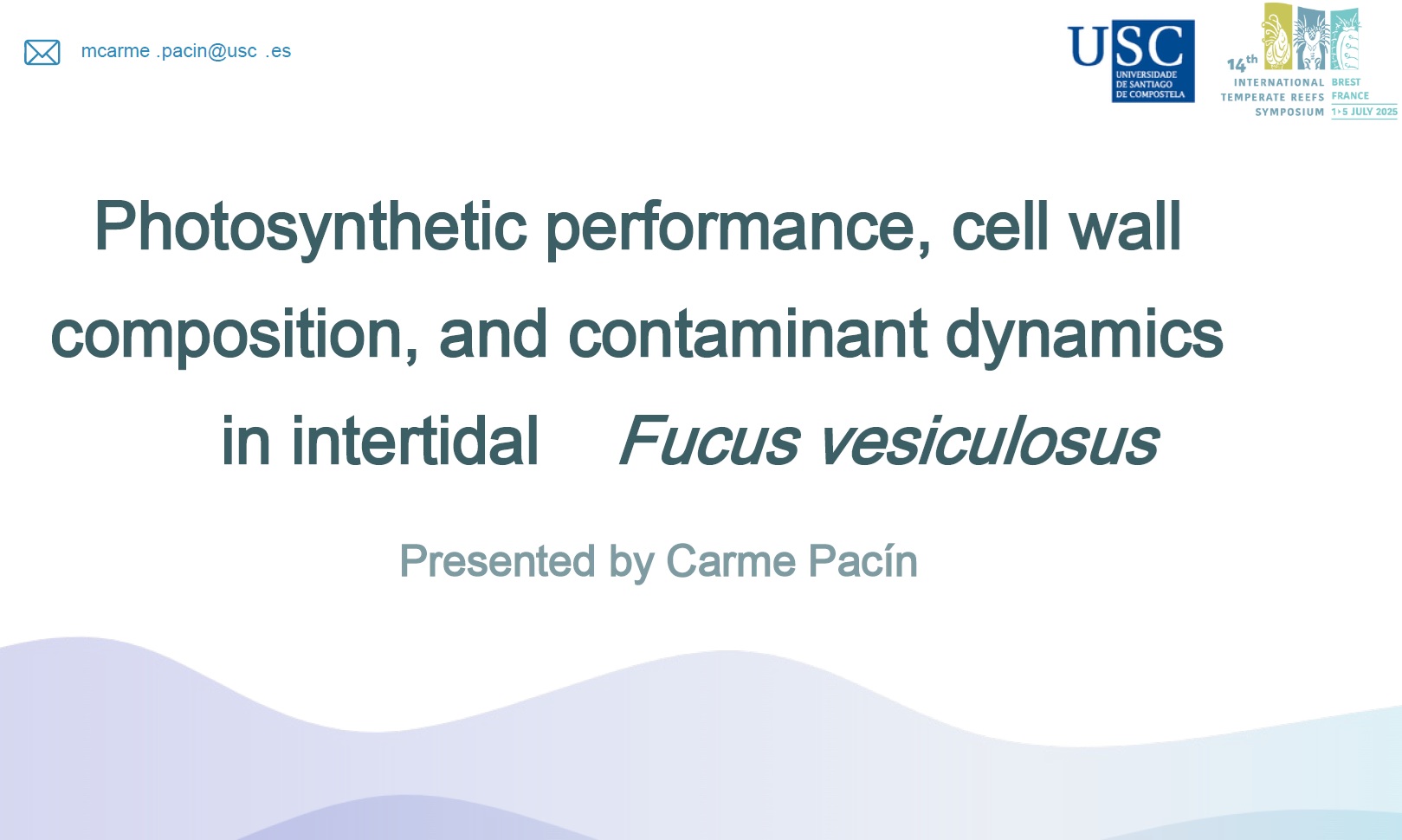
This study examines the physiological resilience of the brown macroalga Fucus vesiculosus against environmental stress on the Galician coast. The research addresses how critical factors in intertidal habitats—such as fluctuations in salinity, temperature, and radiation—induce severe hydric stress during low-tide emersion periods. Using a methodology that combined field monitoring with laboratory experiments—simulating 3-hour and 6-hour tidal cycles—the study evaluated photosynthetic efficiency via chlorophyll fluorescence (F_v/F_m), cell wall chemical composition through FTIR-ATR spectroscopy, and the accumulation dynamics of potentially toxic elements (PTEs). Preliminary results reveal a marked functional heterogeneity within individuals, with significant metabolic variations observed between different thallus dichotomies. Furthermore, a photosynthetic performance gradient was identified in relation to vertical zonation, where individuals from the lower intertidal zone exhibit higher efficiency compared to those from higher zones. Finally, the work suggests a close link between cell wall structure and the seaweed’s capacity to manage contaminants, highlighting that microtopographic position on the shore is a critical determinant for the health and adaptive response of this species to environmental change.
Other project progress.
Authors:

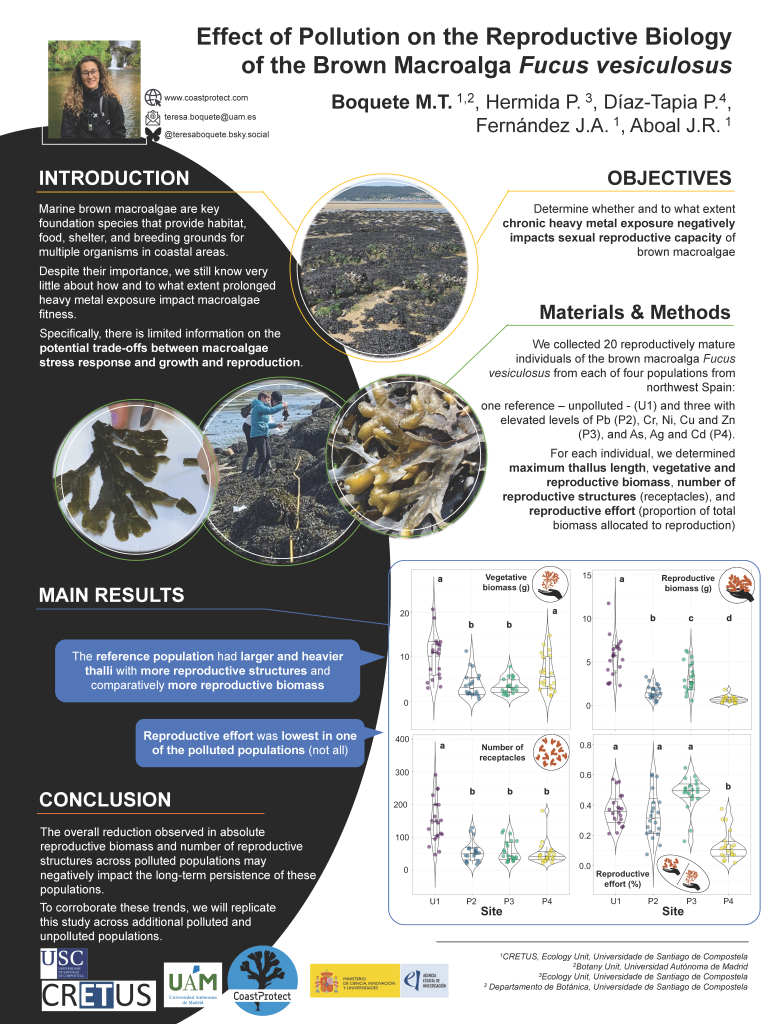
Boquete M.T., Hermida P., Díaz-Tapia P, Fernández J.A., Aboal J.R.
Congress:
Swedish OIKOS Meeting 2025 (february 4th -5th, Stockholm, Sweden)
Authors:
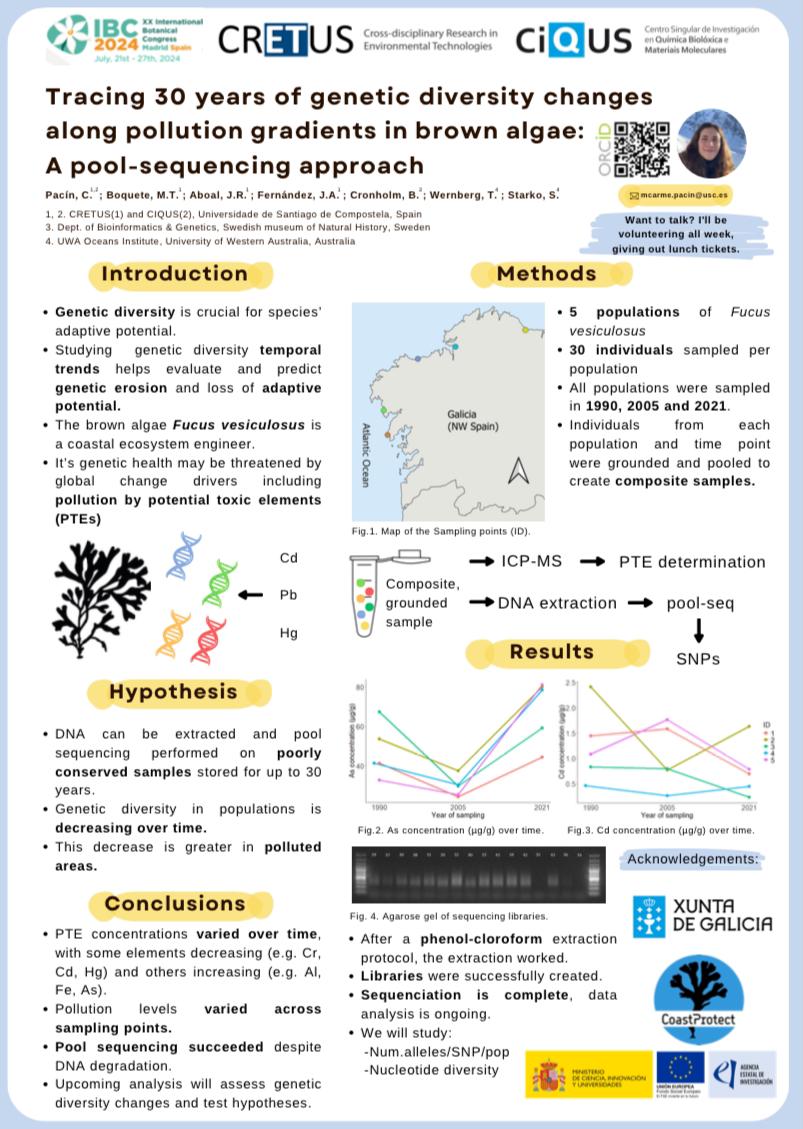
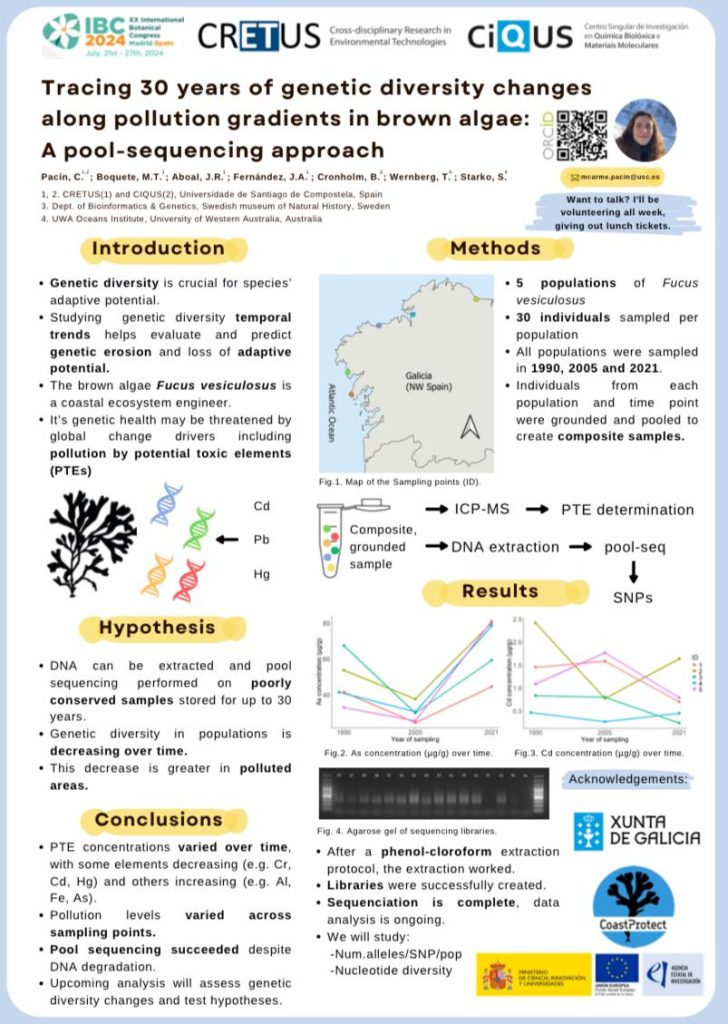
Pacín, C., Boquete, M.T., Aboal, J.R., Fernández, J.A., Cronholm, B., Wernberg, T., Starko, S.
Congress:
Book of Abstracts – Posters - of the XX International Botanical Congress (IBC 2024), 21-27 July 2024, Madrid, España. P.0168, p. 604.
Authors:
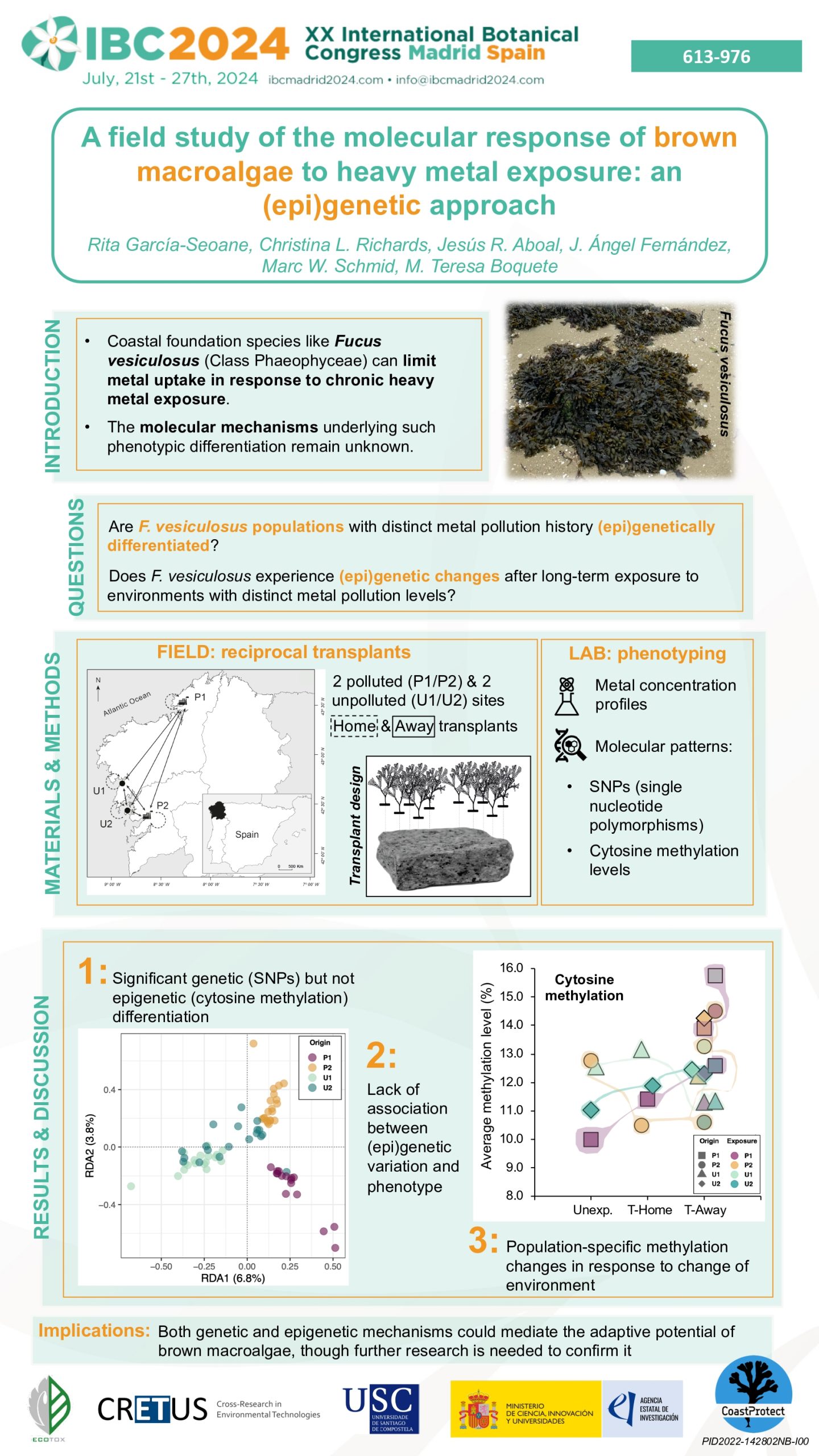
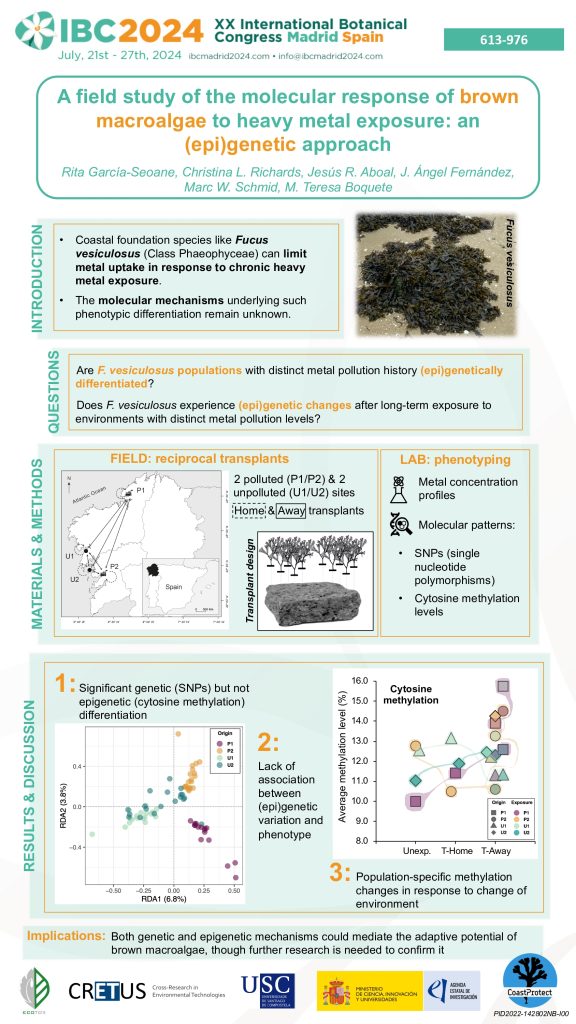
García Seoane, R., Richards, C.L., Aboal, J.R., Fernández, J.A., Schmid, M.W., Boquete, M.T.
Congress:
Book of Abstracts – Posters - of the XX International Botanical Congress (IBC 2024), 21-27 July 2024, Madrid, España. P.0168, p. 101.